
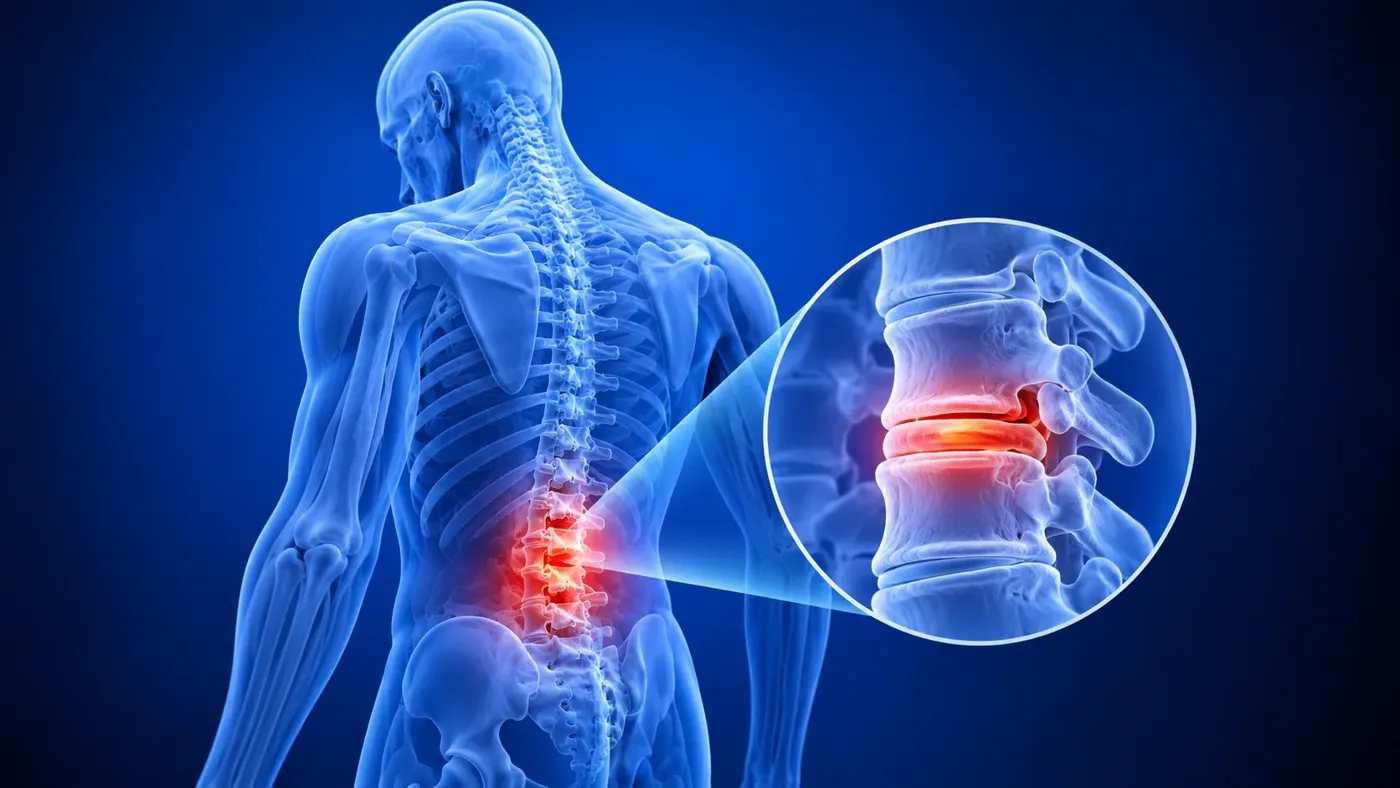
Herniated Disc
How changes in a spinal disc can cause neck, back, arm, or leg symptoms.
Request My ConsultationUnderstanding herniated disc
A herniated disc occurs when material from the disc’s soft center pushes through its outer layer. Nearby nerves may become compressed. Herniations can occur in the neck or lower back.
Common symptoms
- Pain that may travel into an arm or leg.
- Numbness, tingling, or weakness along an affected nerve.
- Some herniated discs cause little or no pain.
What can cause it?
Disc tissue changes with age. A strain or injury can also contribute to a herniation.
How it is evaluated
The location of your symptoms, examination findings, and imaging help identify the affected area. MRI can show discs and nerves; a plain X-ray does not show a disc herniation.
Treatment considerations
These are general educational options. A consultation helps determine what is appropriate for your diagnosis and health.
Disc replacement: evaluation and options →Sources and further reading
This guide is educational and does not replace an individual medical evaluation.
Bring your questions. Understand your options.
Talk with a member of our team about your symptoms and next steps.